
Is Your Commercial Roof Costing You More Than It Should? Warning Signs to Watch For
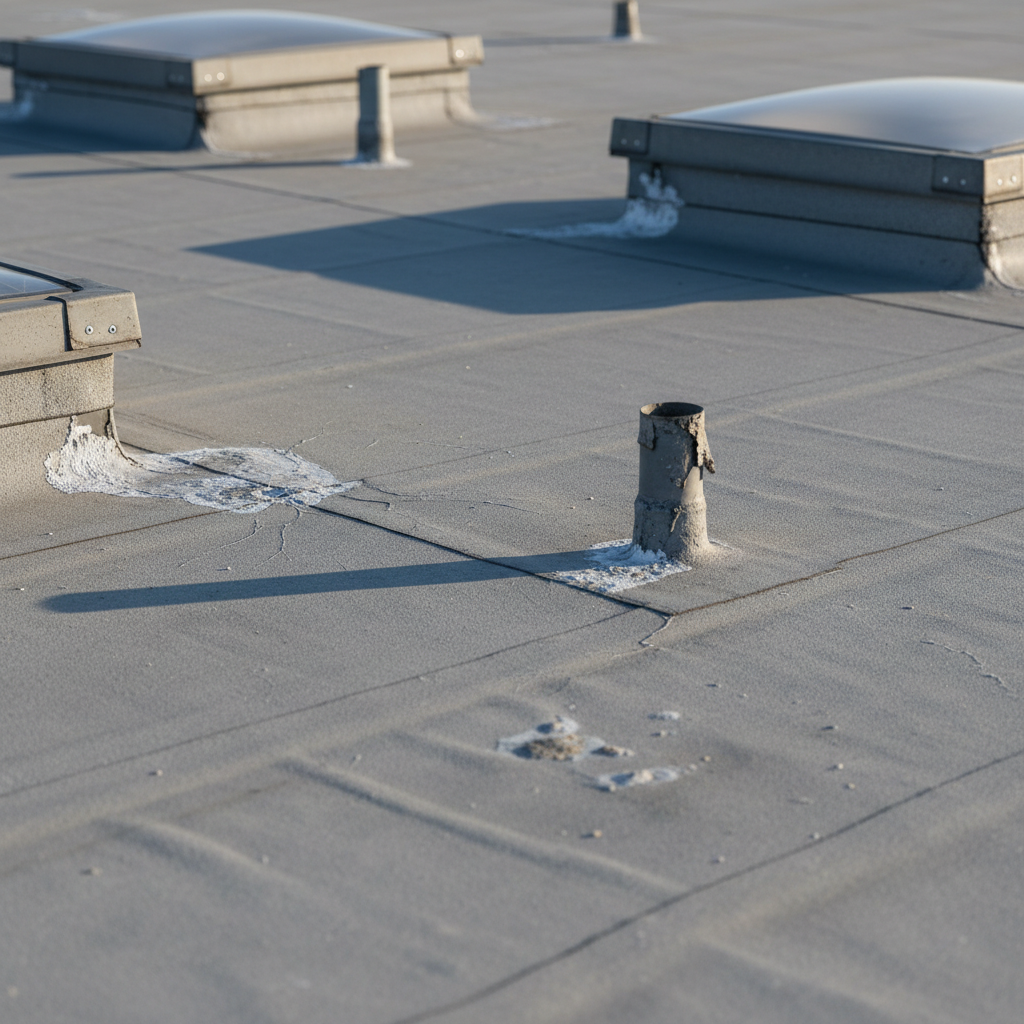
Most commercial roof failures do not happen suddenly. They develop over months or years, quietly draining money through energy loss, interior damage, and escalating repair costs long before anyone notices a drip from the ceiling. By the time water is visibly entering your building, the underlying damage is usually far more extensive than what you can see.
The good news is that failing commercial roofs almost always telegraph their problems well in advance. If you know what to look for, you can catch issues early, when repairs are measured in hundreds of dollars instead of tens of thousands.
Here are eight warning signs that your commercial roof may be costing you more than it should.
1. Rising Energy Bills Without a Clear Explanation
If your heating or cooling costs have been climbing steadily and you have not changed your HVAC system, occupancy, or operating hours, your roof may be the culprit.
Commercial roofs are a critical component of your building’s thermal envelope. When insulation becomes saturated with moisture, it loses its R-value dramatically. Wet insulation can perform 40% worse than dry insulation, which means your HVAC system works harder and runs longer to maintain the same interior temperature.
In Colorado Springs, where summer highs regularly exceed 90 degrees and winter nights drop well below freezing, compromised roof insulation translates directly to higher utility bills. If your energy costs have increased 15% or more over a two-year period without other explanation, a roof inspection should be on your list.
2. Interior Water Stains or Moisture
Water stains on ceiling tiles, drywall, or walls are obvious indicators, but they only tell part of the story. By the time water has traveled through the roof membrane, through the insulation, through the deck, and down to a visible surface, it has often migrated laterally. The stain you see on the ceiling may be 10 to 20 feet from the actual point of entry on the roof.
Do not dismiss small stains as cosmetic issues. Every interior water stain represents a breach in your roofing system that is actively causing damage to structural components, insulation, and potentially electrical systems. A professional leak investigation traces the water back to its source and addresses the root cause rather than just the symptom.
3. Ponding Water
After a rainstorm, walk your roof (or have your maintenance team check it) 48 hours later. Any water still standing on the roof surface at that point is considered ponding water, and it is a problem.
Ponding water accelerates membrane deterioration, adds structural load to the roof deck, and provides a breeding ground for biological growth. On flat commercial roofs, ponding typically results from:
- Clogged or undersized drains and scuppers
- Sagging deck areas caused by structural deflection or overloading
- Settled insulation that has compressed over time, creating low spots
- Poor original design that did not account for adequate drainage slope
In Colorado Springs, ponding water becomes especially dangerous during freeze-thaw cycles. Water that ponds during the day freezes at night, expanding and working its way into seams and laps. This freeze-thaw action can turn a minor drainage issue into a major membrane failure over the course of a single winter.
4. Blistering, Bubbling, or Ridging on the Membrane
Walk your flat roof and look at the membrane surface. If you see blisters (raised bubbles), ridging (linear raised areas along seams), or areas where the membrane appears to be separating from the substrate, moisture has infiltrated the roofing assembly.
Blistering occurs when moisture trapped beneath or within the membrane is heated by the sun and converts to vapor, creating pressure that pushes the membrane upward. At Colorado Springs’ elevation, where UV radiation is roughly 25% more intense than at sea level, this process accelerates significantly.
Small blisters can be monitored. Large blisters, or blisters that are cracked or open, require prompt repair because they expose the underlying layers to direct weather exposure.
5. Loose, Damaged, or Missing Flashing
Flashing is the material that seals the transitions between your roof membrane and vertical surfaces like parapet walls, HVAC curbs, pipes, vents, and skylights. These transition points are where the majority of commercial roof leaks originate.
Inspect the flashing at every penetration and perimeter edge. Warning signs include:
- Flashing pulling away from walls or curbs, creating gaps
- Cracked or dried-out sealant at flashing terminations
- Rust or corrosion on metal flashing components
- Missing flashing where sections have blown off in wind events
Colorado Springs’ combination of high winds (gusts routinely exceed 60 mph in winter) and intense UV exposure is particularly hard on flashing details. Sealants that might last 10 years in a moderate climate may need replacement every 5 to 7 years here.
6. Your Roof Is Approaching or Past Its Expected Service Life
Every roofing system has a projected service life, and understanding where your roof sits on that timeline is essential for planning:
- Built-up roofing (BUR): 20 to 30 years
- Modified bitumen: 15 to 25 years
- EPDM: 20 to 30 years
- TPO: 20 to 30 years
- Metal: 30 to 50 years (depending on gauge, coating, and maintenance)
These ranges assume proper installation and regular maintenance. In Colorado Springs, the combination of UV exposure, hail events, wind stress, and thermal cycling typically pushes roofs toward the lower end of their expected range.
If your roof is within five years of its projected end-of-life, proactive assessment is far smarter than reactive replacement. A comprehensive maintenance program can help you extract maximum value from the remaining service life while planning and budgeting for the eventual replacement.
7. Frequent or Recurring Repairs
Track your repair history and costs. If you are calling for repairs more than once or twice a year, or if the same areas keep failing despite being repaired, your roof is telling you something important: the system is deteriorating beyond what localized repairs can address.
A useful benchmark: if your annual repair costs exceed 20% to 30% of what a new roof would cost, you are likely past the point of diminishing returns on repairs. Every dollar spent patching a systemically failing roof is a dollar that could have gone toward a replacement that resets the clock for another two to three decades.
This does not mean every repair is wasteful. Isolated damage from a hail event or a single failed seam on an otherwise healthy roof is exactly the kind of problem targeted repairs solve efficiently. The warning sign is the pattern — repairs becoming more frequent, more widespread, and more expensive over time.
8. Visible Storm Damage
Colorado Springs sits in one of the most active hail corridors in the United States. The Front Range sees an average of seven to nine significant hail events per year, and commercial roofs take the brunt of that impact.
After any significant weather event, have your roof inspected. Storm damage may include:
- Impact marks or punctures in the membrane from hail
- Displaced gravel or ballast on BUR systems
- Dented or creased metal panels
- Torn or lifted membrane at edges and corners from wind
- Damaged flashing blown loose or bent by wind-driven debris
Storm damage that goes unaddressed does not stay static. A small puncture from a hailstone becomes a leak path. A lifted membrane edge becomes a wind-catch that peels back further in the next storm. Prompt inspection and repair after weather events prevents cascading damage.
Colorado-Specific Factors That Accelerate Roof Deterioration
Beyond the warning signs themselves, Colorado Springs property owners should understand why roofs in this market tend to age faster than national averages:
- Elevation and UV — At 6,035 feet, your roof receives significantly higher UV radiation than roofs at lower elevations. This breaks down polymers in membranes and coatings faster.
- Thermal shock — Daily temperature swings of 30 to 50 degrees are common, especially in spring and fall. This constant expansion and contraction stresses every component of the roofing assembly.
- Hail frequency — Repeated hail impacts, even from smaller stones, cause cumulative damage that shortens roof life.
- Low humidity — Colorado’s dry air causes certain sealants and caulks to dry out, crack, and fail faster than they would in more humid climates.
These factors do not mean your roof is doomed to a short life. They mean that regular professional inspection is not optional — it is a baseline requirement for protecting your investment.
What to Do If You Spot These Signs
If you have identified one or more of these warning signs on your commercial property, the next step is straightforward: get a professional assessment before a manageable issue becomes an emergency.
A thorough roof inspection documents current conditions, identifies immediate repair needs, and gives you a clear picture of your roof’s remaining service life. With that information, you can make informed decisions about repair, restoration, or replacement on your timeline and your budget — not in crisis mode after a major failure.
Our team provides detailed commercial roof assessments for properties throughout Colorado Springs and the surrounding area. We document everything with photos and measurements so you have complete transparency about your roof’s condition and your options.