
The Complete Guide to Flat Roof Storm Damage Repair in Colorado
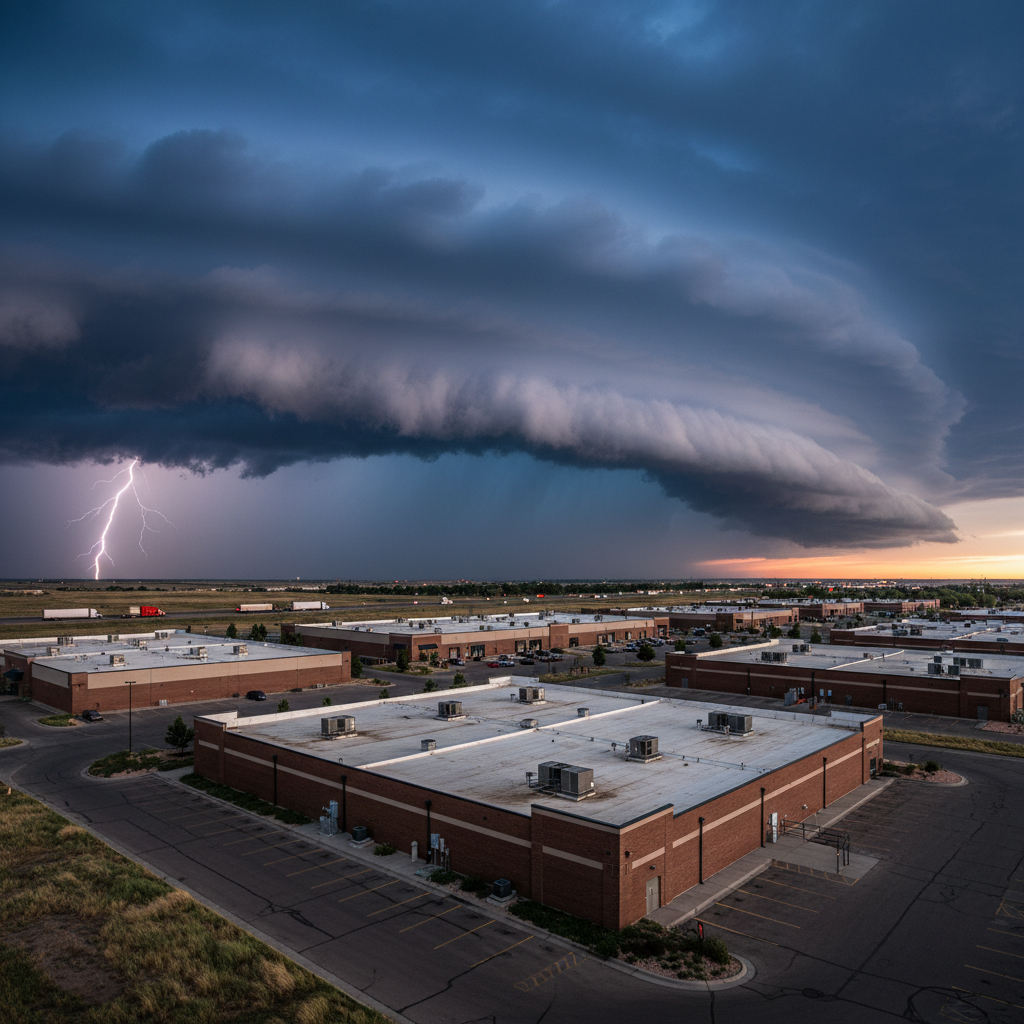
Colorado’s Front Range ranks among the most storm-active regions in the United States. The corridor stretching from Colorado Springs through Denver to Fort Collins experiences an average of 7 to 10 significant hailstorms per year, with some producing stones exceeding two inches in diameter. For commercial property owners with flat roofs, each storm season carries real financial risk.
This guide walks you through the full cycle: identifying damage, taking immediate protective action, working through repairs, handling insurance, and preparing for the next storm.
Colorado Storm Damage by the Numbers
Understanding the scale of the threat helps frame the importance of preparation and rapid response.
The National Weather Service records show that Colorado’s Front Range averages more hail events per year than almost any other metro region in the country. The Insurance Information Institute consistently ranks Colorado among the top three states for insured hail losses. In recent years, single storm events along the Front Range have generated over a billion dollars in insured damage.
For commercial flat roofs, the concern goes beyond cosmetic harm. A single puncture in a flat roof membrane can lead to thousands of dollars in interior water damage if not addressed promptly.
Types of Storm Damage to Flat Roofs
Not all storm damage looks the same, and not all of it is visible from the ground. Here are the primary categories commercial property owners need to understand.
Hail Impact Damage
Hail strikes flat roofing membranes with concentrated force. On single-ply systems like TPO or PVC, hail can crack or puncture the membrane. On built-up roofing (BUR), it can fracture the surface layer and expose underlying felts. On modified bitumen, large hail fractures the granule surface and can compromise the waterproofing layer beneath.
The danger with hail damage on flat roofs is that punctures may be small and difficult to see during a casual inspection, yet they create direct paths for water infiltration.
Wind Damage
High winds — common during Colorado’s spring and early summer storms — can lift and peel membrane seams, displace flashing around penetrations, and tear loose any areas where adhesion has weakened over time. Wind-driven debris can also gouge or puncture membrane surfaces.
Ponding and Drainage Failures
Storm debris often clogs drains, scuppers, and gutters on flat roofs. When drainage is blocked, water ponds on the roof surface. Prolonged ponding accelerates membrane degradation, adds structural load, and can expose any existing weak points that would otherwise have handled normal water flow.
Thermal Shock
Colorado storms frequently bring rapid temperature drops — sometimes 30 degrees or more in under an hour. This thermal shock can cause membrane contraction that stresses seams and flashings, particularly on older systems that have lost flexibility.
Immediate Steps After a Storm
What you do in the first 24 to 48 hours after a major storm matters significantly.
1. Document the date and time of the storm. Your insurance claim will require this. Note wind speeds and hail size if reported by local news or the National Weather Service.
2. Do not walk the roof yourself. Wet, debris-covered flat roofs are hazardous. Storm-damaged areas may be structurally compromised. Leave the inspection to professionals with proper safety equipment.
3. Check the interior for leaks. Walk through the building and look for water stains on ceiling tiles, drips, damp insulation, or moisture on walls near the roofline. Document everything with photos and timestamps.
4. Arrange for emergency tarping if active leaks are present. Temporary waterproofing measures can prevent thousands of dollars in additional interior damage while you wait for permanent repairs.
5. Contact a professional roofing contractor for an inspection. The sooner a qualified team assesses the roof, the sooner you have documentation for your insurance claim and a repair plan in place.
For emergency situations, visit our flat roof storm damage repair page to learn how we respond.
The Professional Inspection and Repair Process
A thorough post-storm inspection by a qualified commercial roofing contractor follows a systematic approach.
Full-surface visual inspection. The crew walks the entire roof surface, examining every square foot of membrane for punctures, cracks, lifted seams, and displaced flashing. They check all penetrations — HVAC units, vents, pipes, skylights — for compromised seals.
Core samples (when warranted). If the inspector suspects moisture infiltration beneath the membrane, small core samples may be taken to evaluate the condition of the insulation and deck below. Infrared moisture scanning is another tool used to map wet areas without cutting into the roof.
Detailed documentation. A professional report includes photos, measurements, damage descriptions, and a recommended scope of repair. This documentation serves dual purposes: it guides the repair work and supports your insurance claim.
Repair execution. Depending on the extent of damage, repairs may range from localized membrane patches and seam re-welding to full-section membrane replacement. In cases of widespread damage, a complete roof restoration or replacement may be the most cost-effective path forward.
If your flat roof is experiencing active leaks unrelated to storm events, our commercial roof leak repair service can help diagnose and resolve the issue.
Insurance Claim Tips for Commercial Property Owners
Navigating a commercial roof insurance claim requires organization and documentation.
File your claim promptly. Most commercial property policies require timely notice of damage. Do not wait weeks to contact your carrier.
Provide your own documentation. Do not rely solely on the insurance company’s adjuster. Your roofing contractor’s independent inspection report, photos, and damage assessment give you a second set of professional eyes and can identify damage that an adjuster’s brief visit might miss.
Understand your policy’s deductible and coverage limits. Commercial property policies vary widely. Know whether your policy covers the full replacement cost or only depreciated value. Understand whether cosmetic damage is excluded.
Request that your roofing contractor meet with the adjuster. Having a knowledgeable contractor present during the adjuster’s inspection ensures that all damage is identified and properly categorized. This is common practice and most adjusters welcome it.
Keep records of all interior damage. Water damage to inventory, equipment, ceilings, and flooring is typically covered under your policy, but only if you document it thoroughly.
Get repair estimates in writing before authorizing work. Your insurance company will want to see a detailed scope and cost estimate before approving repairs.
Preparing Your Flat Roof for Storm Season
The best time to address storm vulnerability is before the storms arrive. Colorado’s severe weather season runs primarily from April through September, with peak hail activity in May, June, and July.
Schedule a spring maintenance inspection. Have a professional roofing contractor inspect your flat roof every spring before storm season begins. They will identify and repair minor issues — loose seams, cracked caulk, clogged drains — that could become major problems under storm stress.
Clear all drainage pathways. Ensure that drains, scuppers, and gutters are free of debris so that stormwater moves off the roof quickly.
Secure rooftop equipment. HVAC units, satellite dishes, and other rooftop-mounted equipment should be firmly anchored. Loose equipment becomes both a damage source and a damage target during high winds.
Trim overhanging trees. Branches that overhang your roof become projectiles during wind events. Remove them before they become a problem.
Review your insurance policy annually. Confirm that your coverage limits reflect current replacement costs. Building material prices have risen significantly in recent years, and an outdated policy limit could leave you underinsured.
Act Before the Next Storm
Colorado’s weather does not wait, and neither should your roof maintenance. Whether you are dealing with existing storm damage or want to prepare your flat roof for what is ahead, Elevation Commercial Roofing provides expert inspections, repairs, and restoration services to commercial property owners across Colorado Springs and the Front Range.
Schedule your free storm damage inspection today — we respond quickly because we know that every hour of delay increases the risk of interior damage.