
How to Save Money on Commercial Roofing in Colorado Springs
Commercial roofing is not cheap. A full replacement on a 10,000-square-foot building in Colorado Springs can easily reach six figures, and that expense hits your bottom line whether you planned for it or not. But the business owners who spend the least on roofing over a 20-year period are not the ones who found the cheapest contractor. They are the ones who made strategic decisions about maintenance, timing, and system selection that prevented small problems from becoming expensive ones.
Here is how to keep your commercial roofing costs under control without sacrificing performance.
Preventive Maintenance Pays for Itself
The single most effective way to reduce long-term roofing costs is a structured preventive maintenance program. The math is straightforward: routine inspections and minor repairs cost a fraction of what emergency repairs and premature replacements cost.
A well-maintained commercial roof can last 25 to 30 years. A neglected one may fail in 12 to 15. On a roof that cost $80,000 to install, that is the difference between an annual cost of $2,700 and $5,300 — essentially doubling your roofing expense through neglect.
An effective maintenance program includes:
- Biannual inspections — Ideally in spring (after winter freeze-thaw cycles and before hail season) and in fall (before snow loads arrive).
- Clearing drains and scuppers — Ponding water is one of the fastest ways to degrade a membrane. Keeping drainage pathways clear takes minutes but prevents thousands in damage.
- Sealant and flashing checks — Every penetration (HVAC curbs, pipes, vents) is a potential leak point. Sealants deteriorate faster at Colorado Springs’ elevation due to UV intensity, so these need regular attention.
- Documentation — Maintaining a log of inspections, repairs, and conditions supports warranty claims and helps you plan capital expenditures accurately.
Most commercial roofing maintenance programs in Colorado Springs run between $0.05 and $0.15 per square foot annually. Compared to the cost of a premature replacement, this is one of the highest-ROI line items in your facility budget.
Roof Coatings: Extend Life Without Replacing
If your existing roof is structurally sound but the membrane is showing its age, a roof coating system can add 10 to 15 years of service life at a fraction of the cost of a full replacement.
Silicone and acrylic coatings create a seamless, reflective barrier over your existing roof surface. The benefits include:
- Cost savings of 50% to 70% compared to a full tear-off and replacement.
- No tear-off required — The coating is applied directly over the existing membrane, which eliminates disposal costs and reduces project duration.
- Improved energy efficiency — Reflective coatings reduce surface temperatures by up to 50 degrees Fahrenheit, which can cut cooling costs by 10% to 25% depending on your building’s insulation and HVAC system.
- UV protection — Particularly valuable in Colorado Springs, where UV radiation at altitude accelerates membrane degradation. A quality coating acts as a sunscreen for your roof.
Coatings are not appropriate for every situation. If the existing membrane has extensive moisture damage, widespread seam failures, or compromised insulation, a coating will not solve the underlying problems. A thorough inspection determines whether your roof is a candidate.
Metal Roof Restoration vs. Replacement
For buildings with existing metal roofing, metal roof restoration offers another avenue for significant savings. Rather than tearing off and replacing aged metal panels, a restoration system addresses rust, failing fasteners, and open seams while adding a protective coating that extends the roof’s life by a decade or more.
Restoration typically costs 40% to 60% less than a full metal roof replacement. It also avoids the disruption of a tear-off, which matters if your operations are sensitive to noise, debris, or temporary exposure.
The key factors that determine whether restoration is viable:
- Structural integrity of the panels — If the metal substrate is still sound, restoration makes sense. If panels are corroded through or structurally compromised, replacement is the better path.
- Fastener condition — Loose or backed-out fasteners can be addressed during restoration, but widespread fastener failure across the entire roof may indicate a systemic issue.
- Insulation condition — If the insulation beneath the metal panels is wet or compressed, it needs to be addressed regardless of what you do with the panels above.
Energy-Efficient Systems Reduce Operating Costs
Your roof is not just a barrier against weather. It is one of the largest surfaces affecting your building’s thermal performance. Choosing an energy-efficient roofing system reduces HVAC costs every month for the life of the roof.
Strategies that deliver measurable energy savings:
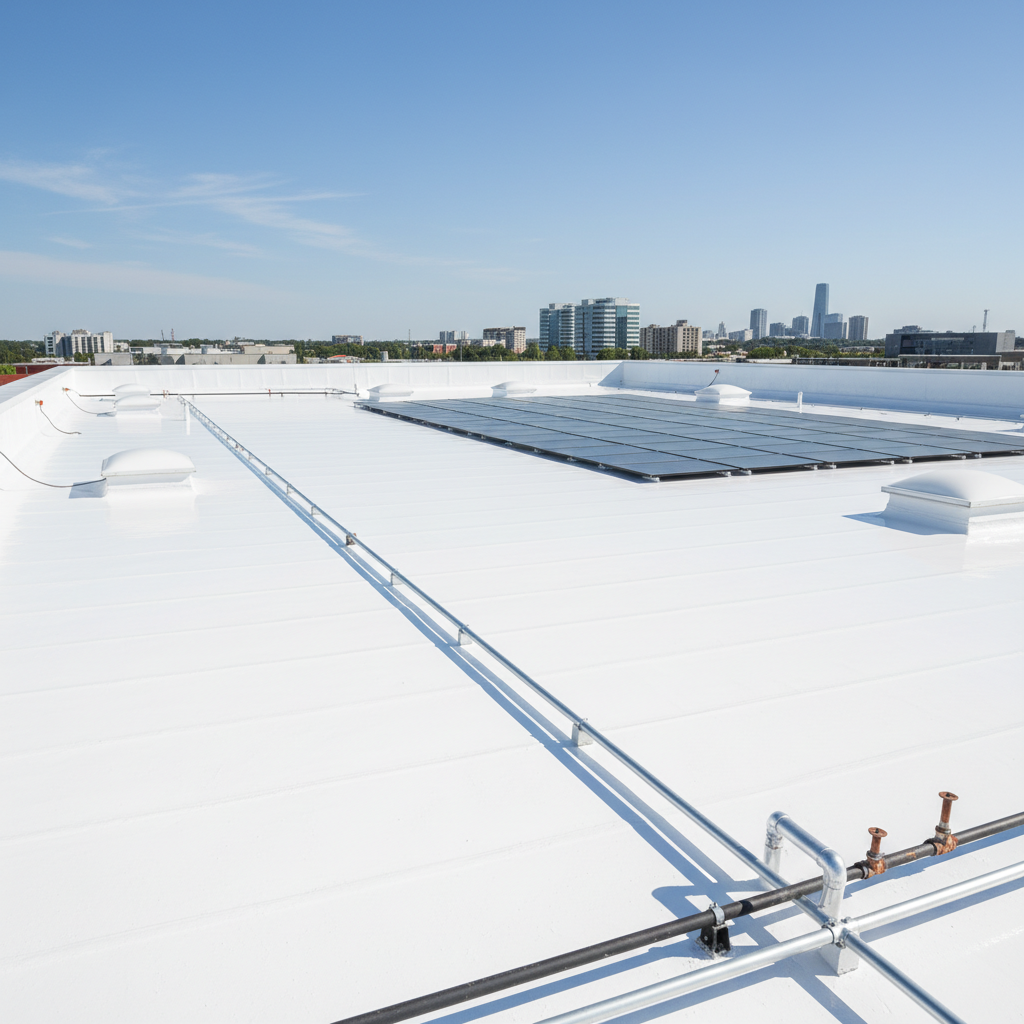
- Cool roofing membranes — White or light-colored TPO and PVC membranes reflect solar radiation rather than absorbing it. In Colorado Springs’ 300-plus days of sunshine, this has a meaningful impact on interior temperatures and cooling loads.
- Upgraded insulation — If your current insulation is below modern code requirements, a roofing project is the most cost-effective time to add insulation. The incremental cost during a re-roof is far less than retrofitting insulation as a standalone project.
- Tapered insulation systems — These create positive drainage slope on flat roofs, eliminating ponding water while improving thermal performance. They solve two problems simultaneously.
Some energy-efficient roofing systems may qualify for utility rebates or tax incentives. Check with Colorado Springs Utilities and your tax advisor for current programs.
Timing Your Project Strategically
When you schedule your roofing work affects what you pay. Understanding the market dynamics helps you get better pricing:
- Off-season scheduling — Late fall and early spring (outside of the peak May-through-September season) often bring more competitive pricing. Contractors have more availability, and material suppliers may offer better terms.
- Avoiding post-storm rush — After a major hailstorm hits Colorado Springs, every roofing contractor in the region is booked out for months. If your roof needs attention but is not an emergency, waiting for the surge to pass can save 10% to 20%.
- Planning ahead — Emergency repairs always cost more than planned work. If your roof is approaching the end of its expected service life, start getting assessments and proposals 12 to 18 months before you expect to need the work. This gives you time to budget, compare options, and schedule during a favorable window.
Repair vs. Replace: Making the Right Call
One of the most expensive mistakes in commercial roofing is making the wrong repair-vs-replace decision. Both errors are costly:
- Replacing too early wastes the remaining service life of a roof that could have been maintained or restored.
- Repairing too long means pouring money into a failing system that will need replacement anyway, while accumulating interior damage and operational disruptions.
General guidelines for the decision:
- If repair costs in a single year exceed 30% of what a new roof would cost, replacement is likely the better investment.
- If the roof is less than halfway through its expected service life and the issues are localized, targeted repairs make sense.
- If you are experiencing recurring leaks in different locations, the system is likely failing systemically, and continued repairs are a losing proposition.
A contractor who is honest about this boundary — even when it means recommending a less expensive repair over a more profitable replacement — is a contractor worth keeping.
Protect Your Warranty
Your roofing warranty is a financial asset, but only if you maintain it. Most manufacturer warranties require documented regular maintenance. Skip the maintenance, and you risk voiding the warranty right when you need it most.
Keep records of every inspection, repair, and maintenance visit. If a warranty claim arises, this documentation is the difference between a covered repair and an out-of-pocket expense.
Take the First Step
The most expensive commercial roof is the one you ignore until it fails. Whether your roof needs a maintenance program, a restoration, or a full replacement, the smartest financial move is getting a professional assessment now so you can plan rather than react.
Contact our team for a no-cost roof evaluation. We will give you an honest assessment of your roof’s current condition and show you the most cost-effective path forward.