
Spray Foam vs. Single-Ply vs. Membrane Coatings: Choosing the Right Commercial Roofing System
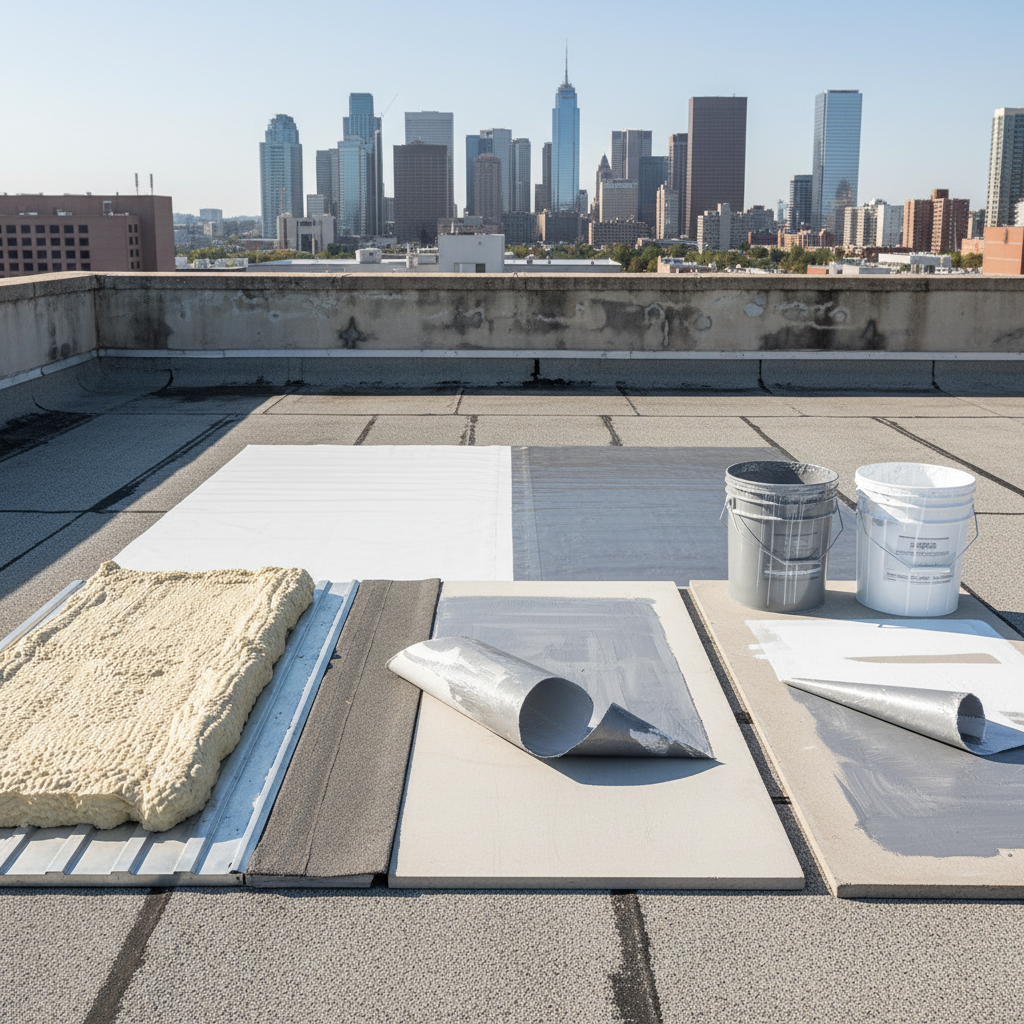
Selecting the right roofing system for a commercial building is a decision that affects your operating costs, maintenance burden, and building performance for decades. Three of the most widely installed systems on commercial flat and low-slope roofs in Colorado are spray polyurethane foam (SPF), single-ply membranes (TPO, PVC, and EPDM), and membrane roof coatings.
Each has distinct advantages and limitations. This guide provides a straightforward comparison to help you determine which system aligns with your building’s requirements, your budget, and Colorado’s demanding climate.
Spray Polyurethane Foam (SPF)
Spray foam roofing is a monolithic system applied as a liquid that expands into a solid, closed-cell foam layer directly on the existing roof surface. It is then protected by an elastomeric coating — typically silicone — that provides UV resistance and weatherproofing.
How It Works
The SPF is sprayed in multiple passes to achieve the desired thickness, typically 1 to 2 inches. The foam conforms to every contour, penetration, and irregular surface on the roof, creating a seamless, fully adhered layer with no joints or seams. The protective topcoat is then applied over the cured foam.
Advantages
Superior insulation. SPF delivers the highest R-value per inch of any commercial roofing insulation — approximately R-6.5 per inch. For Colorado buildings dealing with heating costs through long winters, this thermal performance translates directly to energy savings.
Seamless application. No seams means no seam failures. Water has no entry points along joints, laps, or fastener penetrations because there are none.
Lightweight. SPF adds minimal structural load, making it suitable for buildings that cannot support heavier systems.
Renewable. When the protective coating wears over time, it can be recoated without removing or replacing the foam — extending the system’s life indefinitely with periodic maintenance.
Limitations
Application sensitivity. SPF must be applied under specific temperature and humidity conditions. Colorado’s weather windows can be narrow, particularly in spring and fall.
Requires skilled applicators. Improper spray technique leads to uneven thickness and performance inconsistencies. Contractor selection matters significantly with this system.
Vulnerable to physical damage. The foam surface can be punctured by foot traffic, dropped tools, or hail. The protective coating mitigates this, but care is needed during rooftop maintenance activities.
Learn more about this system on our spray foam roofing service page.
Single-Ply Membranes: TPO, PVC, and EPDM
Single-ply roofing systems consist of factory-manufactured sheets of synthetic material installed in a single layer over the roof assembly. The three primary single-ply options each have different characteristics.
TPO (Thermoplastic Polyolefin)
TPO has become the most widely installed commercial roofing membrane in the United States. It is a heat-welded thermoplastic membrane available in white, tan, and gray. TPO offers strong UV reflectivity, chemical resistance, and a competitive price point.
PVC (Polyvinyl Chloride)
PVC membranes share TPO’s heat-welded seam technology but offer superior chemical resistance, making them the preferred choice for buildings with rooftop grease exhaust — restaurants, commercial kitchens, and food processing facilities. PVC is also highly fire-resistant.
EPDM (Ethylene Propylene Diene Monomer)
EPDM is a synthetic rubber membrane, typically black, that has been used on commercial roofs for over 50 years. It is installed with adhesive or mechanically fastened, and seams are sealed with tape or adhesive rather than heat welding. EPDM is known for its durability, flexibility, and proven long-term track record.
Advantages of Single-Ply Systems
Proven reliability. Decades of field performance data support the longevity of properly installed single-ply membranes. Expected service life ranges from 20 to 30 years.
Fast installation. Large membrane sheets cover area quickly, reducing labor time and building disruption compared to multi-layer systems.
Strong seam integrity (TPO and PVC). Heat-welded seams on thermoplastic membranes create bonds that are often stronger than the membrane itself.
Wide contractor availability. Most commercial roofing contractors are experienced with single-ply installation, giving building owners more options for competitive bidding.
Limitations
Seams exist. Despite strong weld integrity, seams are still the most common failure point on single-ply roofs. Proper installation quality control is essential.
Limited insulation value. The membrane itself provides negligible insulation. Insulation must be installed as a separate layer beneath the membrane, adding cost and complexity.
Puncture vulnerability. Single-ply membranes can be punctured by foot traffic, debris, and hail — particularly thinner gauge material. Specifying adequate membrane thickness matters in Colorado’s hail-prone environment.
EPDM seam concerns. Unlike heat-welded TPO and PVC, EPDM’s adhesive and tape seams can degrade over time and are more susceptible to failure, particularly under Colorado’s intense UV exposure.
Explore our single-ply roofing offerings to see how we approach these installations.
Membrane Roof Coatings
Membrane coatings are liquid-applied systems — typically silicone, acrylic, or polyurethane — that are rolled, sprayed, or brushed directly onto an existing roof surface. They are most commonly used as a restoration strategy over aging single-ply, metal, modified bitumen, or built-up roofing systems.
How They Work
The existing roof surface is cleaned and repaired, seams and penetrations are reinforced with fabric and coating, and then the full surface receives multiple coating passes to achieve the specified mil thickness. The result is a seamless, reflective, waterproof membrane bonded to the existing roof.
Advantages
Cost-effective restoration. Coatings can extend an aging roof’s service life by 10 to 20 years at a fraction of the cost of full replacement. Building owners avoid tear-off, disposal, and the expense of a complete new system.
Seamless and self-flashing. Like SPF, coatings create a monolithic surface with no seams. They conform to penetrations, curbs, and irregular details.
Highly reflective. White and light-colored coatings reflect a high percentage of solar radiation, reducing cooling loads and interior temperatures — meaningful in Colorado’s high-altitude sun.
Sustainability. Coatings eliminate the need to send old roofing material to a landfill. The existing roof stays in place, and the coating adds a new waterproofing layer on top.
Limitations
Requires a sound substrate. Coatings are not a fix for structurally failed roofs. The existing membrane and insulation must be in serviceable condition for a coating to perform.
Thickness matters. Coatings applied too thin will not deliver the warranted service life. Proper mil-thickness verification during application is critical.
Not ideal for ponding water (acrylic). Acrylic coatings can re-emulsify in standing water. Silicone coatings handle ponding well, but proper drainage should still be maintained.
Recoating required. Coatings are not permanent. They will need recoating every 10 to 15 years, though this is far less expensive than replacement.
Visit our membrane roof coating service page for details on how we execute these projects.
Comparison Summary
When evaluating these three systems side by side, several key differentiators emerge.
Upfront cost: Membrane coatings are the most affordable option, followed by spray foam, with single-ply systems typically carrying the highest initial investment when including insulation and full tear-off of an existing system.
Insulation performance: Spray foam leads by a wide margin. Single-ply systems require separate insulation boards. Coatings add no meaningful insulation value.
Seamless waterproofing: Both spray foam and membrane coatings provide seamless coverage. Single-ply systems have seams that, while strong when heat-welded, represent potential failure points.
Longevity: Single-ply membranes offer 20 to 30 years of service life. Spray foam systems can last indefinitely with periodic recoating. Membrane coatings deliver 10 to 20 years per application cycle.
Hail resistance: Single-ply membranes in heavier gauges and spray foam with adequate coating thickness perform reasonably well. Membrane coatings over a sound substrate also handle hail, though performance depends on the underlying roof’s condition.
Best application scenario: Spray foam excels on irregular roof surfaces and buildings where energy efficiency is a priority. Single-ply is the standard choice for new construction and full replacement projects. Membrane coatings are ideal for restoring aging roofs that still have structural integrity.
Colorado-Specific Considerations
Colorado’s climate introduces factors that can tip the comparison in one direction.
UV intensity at altitude degrades all roofing materials faster than at sea level. Silicone-based coatings and white TPO membranes offer the best UV reflectivity and resistance. EPDM, being black, absorbs heat and is more susceptible to UV-driven degradation.
Hail frequency along the Front Range favors systems with impact resilience. Thicker single-ply membranes (80 mil TPO or PVC) and spray foam with robust coating layers offer the best resistance.
Temperature swings of 40 to 50 degrees in a single day test the flexibility of every roofing material. Silicone coatings and EPDM rubber maintain flexibility across wide temperature ranges. TPO and PVC can become more brittle in extreme cold, though modern formulations have improved significantly.
Snow and moisture demand reliable drainage and waterproofing. Silicone coatings handle ponding water well. SPF can be sprayed to create positive slope, improving drainage on flat roofs that pond.
Make an Informed Decision
The right roofing system depends on your building’s current condition, your performance priorities, and your budget horizon. There is no single best system — only the best system for your specific situation.
Elevation Commercial Roofing installs and maintains all three system types across Colorado Springs, Denver, and the Front Range. We provide honest assessments and help you select the system that delivers the best long-term value for your building.
Request a free consultation today and let our team evaluate your roof and recommend the system that fits your building, your budget, and Colorado’s climate.